
The Manchester of India: Why Ludhiana is the Best City in India for Business Students in 2026
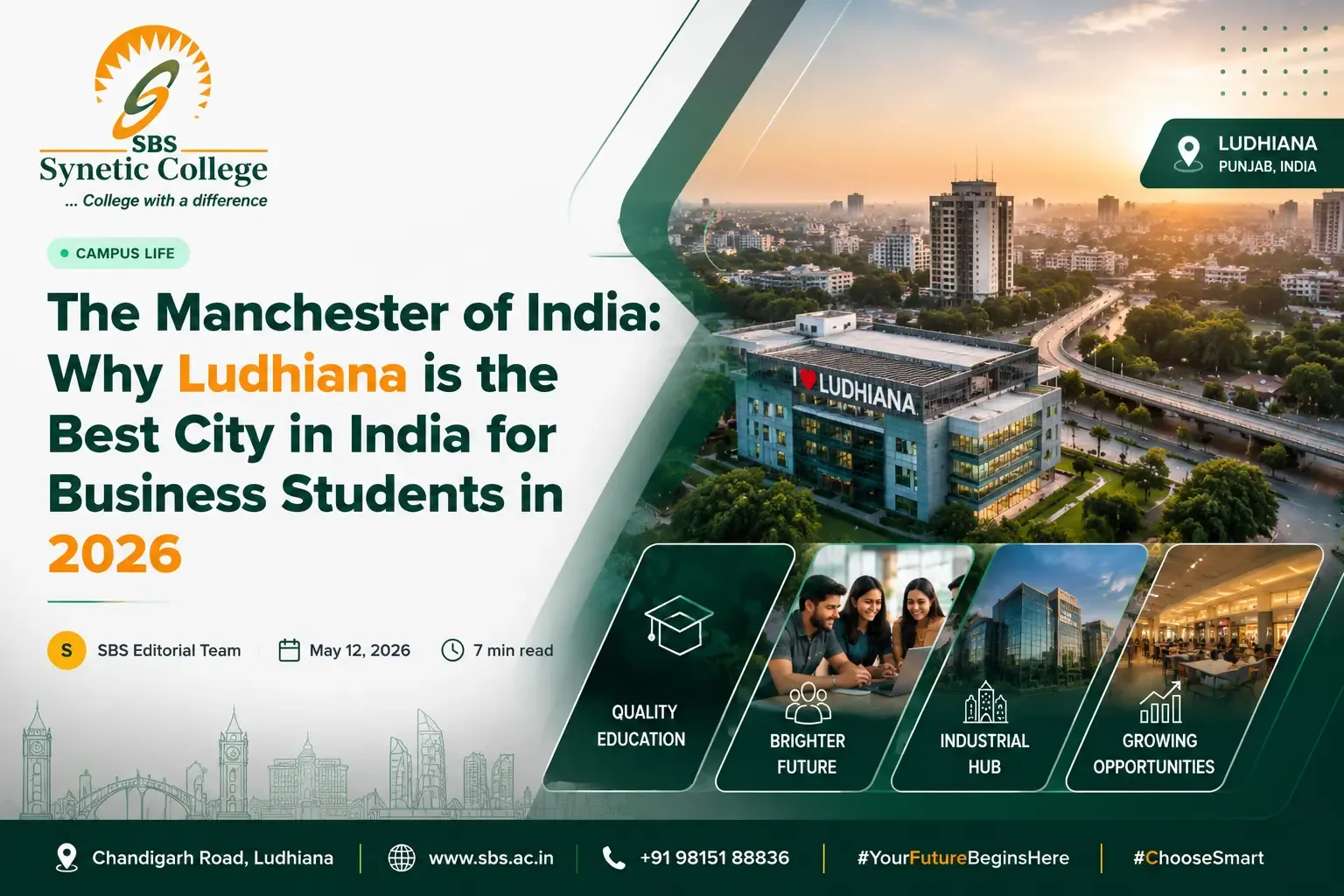
Called 'India's Manchester' by the BBC, Ludhiana is not just Punjab's industrial capital — it is a living classroom for every business, commerce, textile, and management student. Here is why studying here gives you an edge no other city can match.
A City That Teaches You Before Your Classes Even Begin
Most students choose a city for college based on one thing: where the college is. They overlook the city itself — and in doing so, they miss one of the most powerful factors shaping their career readiness.
Where you study matters as much as what you study. And if you are pursuing business, commerce, management, textile design, or any industry-connected degree, there may be no better city in India than Ludhiana.
This is not a marketing claim. It is geography, economics, and industrial history — all working in a student's favour.
Why the BBC Called It "India's Manchester"
The BBC has referred to Ludhiana as "India's Manchester" — a title that carries significant weight given Manchester's historic identity as the global capital of industrial textile manufacturing.
The comparison is earned. Ludhiana accounts for approximately 95% of India's woollen and acrylic knitwear production. The textile industry here comprises over 10,000 industrial units employing more than 500,000 skilled workers. Every year, hosiery garments worth approximately ₹2,000 crore are exported from Ludhiana to European countries, the USA, and the Middle East. In 2025, textile exports from Ludhiana crossed ₹12,000 crore — a 20% growth from the previous year.
North India leads India's textile industry with a 32.0% revenue share in 2025, anchored by clusters in Ludhiana, Panipat, and Kanpur. Ludhiana alone produces the majority of India's winter clothing — from woollen sweaters to acrylic thermals, shawls, hosiery, T-shirts, and knitwear that fill retail shelves from Kashmir to Kanyakumari.
The Government of India has designated Ludhiana a Town of Export Excellence by the Department of Commerce and Industry — an official recognition of its global trade significance.
What This Means for Students: A Living Industrial Classroom
For any student studying business, commerce, management, or design, Ludhiana is a city where the curriculum comes alive outside the classroom.
Most Indian cities offer students theory inside a building and industry somewhere far away. In Ludhiana, industry is everywhere — accessible, visible, and open to learning. The companies you read about in management case studies are not abstract entities. They are Vardhman Textiles in Ludhiana, Rockman Industries on the outskirts of the city, Neva Garments on the industrial roads, Jawandsons supplying fabric to national brands, and Coca-Cola's local bottling plant on Chandigarh Road.
At Synetic Business School, we have built our industrial visits program around this reality. Our students have visited:
- Rockman Industries (Hero Group) — one of India's largest automotive component manufacturers
- Ludhiana Beverages Pvt. Ltd. (Coca-Cola) — witnessing global supply chain and quality systems first-hand
- Verka Milk Plant — understanding cooperative business models and dairy supply chains
- Jawandsons Pvt. Ltd. — export house operations, textile manufacturing, and buyer management
- Neva Garments Ltd. — garment manufacturing, retail operations, and export processes
- CICU Tech Show — industrial technology, automation, and manufacturing innovation
These are not field trips. They are semester-by-semester learning experiences that put students inside the industries they will eventually work in.
Ludhiana's Competitive Advantage for Students: Cost of Living
Beyond the industry advantage, Ludhiana offers a practical economic benefit that students and parents consistently underestimate.
Mumbai, Pune, Bangalore, and Delhi are expensive. A student living in those cities spends ₹15,000–₹25,000 per month on accommodation and food alone. In Ludhiana, the same student spends ₹5,000–₹8,000 per month on food and personal costs, with quality accommodation available at ₹3,000–₹6,000 per month.
That difference compounds over three years. A student in Mumbai spends approximately ₹6–8 lakh more on living costs than a student in Ludhiana over a three-year degree. That money either goes into debt — or stays in the family's pocket when you study in Punjab.
Ludhiana also consistently ranks among the easiest cities in India for business, according to World Bank assessments. Infrastructure, logistics, supply chain services, and business support ecosystems are mature and accessible. For students who want to eventually start their own venture, Ludhiana is one of the most entrepreneur-friendly cities in Northern India.
The Industries That Hire Ludhiana Graduates
A business or commerce degree from Ludhiana comes with something most degrees in smaller cities cannot offer — proximity to actual employers throughout your degree.
When companies come to SBS's UMEED Mega Job Fair — and 35+ companies did in 2025 — they come because they know Ludhiana students have been building industry literacy throughout their program. Students who have visited a Coca-Cola plant, walked a Rockman production line, and toured a garment export house talk differently in interviews. They ask better questions. They understand operations. They are, in the clearest sense, more ready.
The industries hiring graduates from Ludhiana include:
- Textile and garment companies — Vardhman Textiles, Shingora Textiles, export houses and hosiery manufacturers across Punjab
- Banking and financial services — ICICI, HDFC, Kotak, Axis, AU Small Finance Bank, all with strong Ludhiana presence
- Manufacturing and FMCG — Rockman, Kitty Industries, Ralson Tyres, Eastman, Coca-Cola, Reliance
- Healthcare — Fortis Hospital Ludhiana, Aykai Hospital, Dayanand Medical College
- Retail — Westside, Zudio, Reliance Smart, major franchises and local retail chains
- Technology — Tekki Web Solutions, Whizrobo, and a growing IT services sector in Chandigarh corridor
Ludhiana in 2026: A City That Is Still Growing
Ludhiana is not static. The city's Halwara International Airport was inaugurated in February 2026, with commercial flights to Delhi commencing from May 2026 — dramatically improving connectivity to the rest of India and opening new business corridors.
The Punjab Textile Policy introduced incentives including 15% subsidies on modern machinery and tax exemptions for exporters. Over 35% of Ludhiana's textile units have adopted eco-friendly manufacturing. Smart textiles and wearable technology are the city's next frontier — creating new roles for designers, engineers, and business professionals with sustainability knowledge.
Ludhiana aims to achieve 30% export growth by 2027, supported by advanced manufacturing and expanded global outreach. The city's trajectory is upward — and students who build their careers here while it grows will benefit from that momentum.
The SBS Advantage: Learning in the Heart of It
Synetic Business School is located on Chandigarh Road, Ludhiana — one of the city's most commercially active corridors, adjacent to Fortis Hospital and within accessible distance of the city's major industrial zones.
This location is not incidental. It is deliberate. Every semester, our students step out of the classroom and into Ludhiana's real economy — not as tourists, but as observers, learners, and future professionals. By the time they graduate, they know how this city works. And that knowledge travels with them wherever their careers take them.
The Manchester of India is not just a nickname. For SBS students, it is a competitive advantage built into every year of their degree.
Frequently Asked Questions
Why is Ludhiana called the Manchester of India?
Ludhiana earned the title "Manchester of India" — referenced by the BBC and widely used in industry — because of its dominance in textile and hosiery manufacturing. The city produces approximately 95% of India's woollen and acrylic knitwear, employs over 500,000 workers in its textile sector alone, and exports garments worth thousands of crores annually to Europe, the USA, and the Middle East.
Is Ludhiana a good city for students in 2026?
Yes. Ludhiana offers a rare combination of industrial exposure, affordable living costs, and strong employment infrastructure. Students pay significantly less on accommodation and food than in metro cities, while having access to real industrial companies for visits, internships, and placements. The city's Halwara International Airport (inaugurated February 2026) has also significantly improved connectivity.
What industries are based in Ludhiana?
Ludhiana's primary industry is textile and hosiery manufacturing, but the city also has significant automotive component manufacturing (Rockman, Ralson), FMCG (Coca-Cola, Kitty Industries), banking and financial services, healthcare (Fortis Hospital), retail, and a growing IT sector. The city contributes approximately 21% of all industry and 28% of Punjab's output.
Is Ludhiana good for business students specifically?
Yes, particularly for commerce, management, textile, and design students. Ludhiana's industrial base means business students can visit and learn from real manufacturing and export companies throughout their degree — turning theory into practice in a way that is genuinely difficult to replicate in cities without this industrial density.
What is the cost of living for students in Ludhiana?
Students in Ludhiana typically spend ₹5,000–₹8,000 per month on food and personal expenses. Accommodation costs ₹3,000–₹6,000 per month for quality shared rooms. This is significantly more affordable than metro cities like Mumbai, Delhi, or Bangalore — making Ludhiana one of the most cost-effective cities in India for higher education.
Explore at SBS
Continue Reading
Why SBS (Synetic) College, Ludhiana Has the Location Advantage
Sep 21, 2026 · 9 min read
From Coca-Cola to Rockman: How SBS Turns Punjab's Industries into Living Classrooms
Jan 20, 2026 · 6 min read
Ludhiana's Textile Industry in 2026: Numbers, Trends, and Where Graduates Fit In
Sep 16, 2026 · 10 min read
Written by
SBS Editorial Team
Synetic Business School — sharing stories, insights, and updates from our campus in Ludhiana, Punjab.