
Ludhiana's Textile Industry in 2026: Numbers, Trends, and Where Graduates Fit In
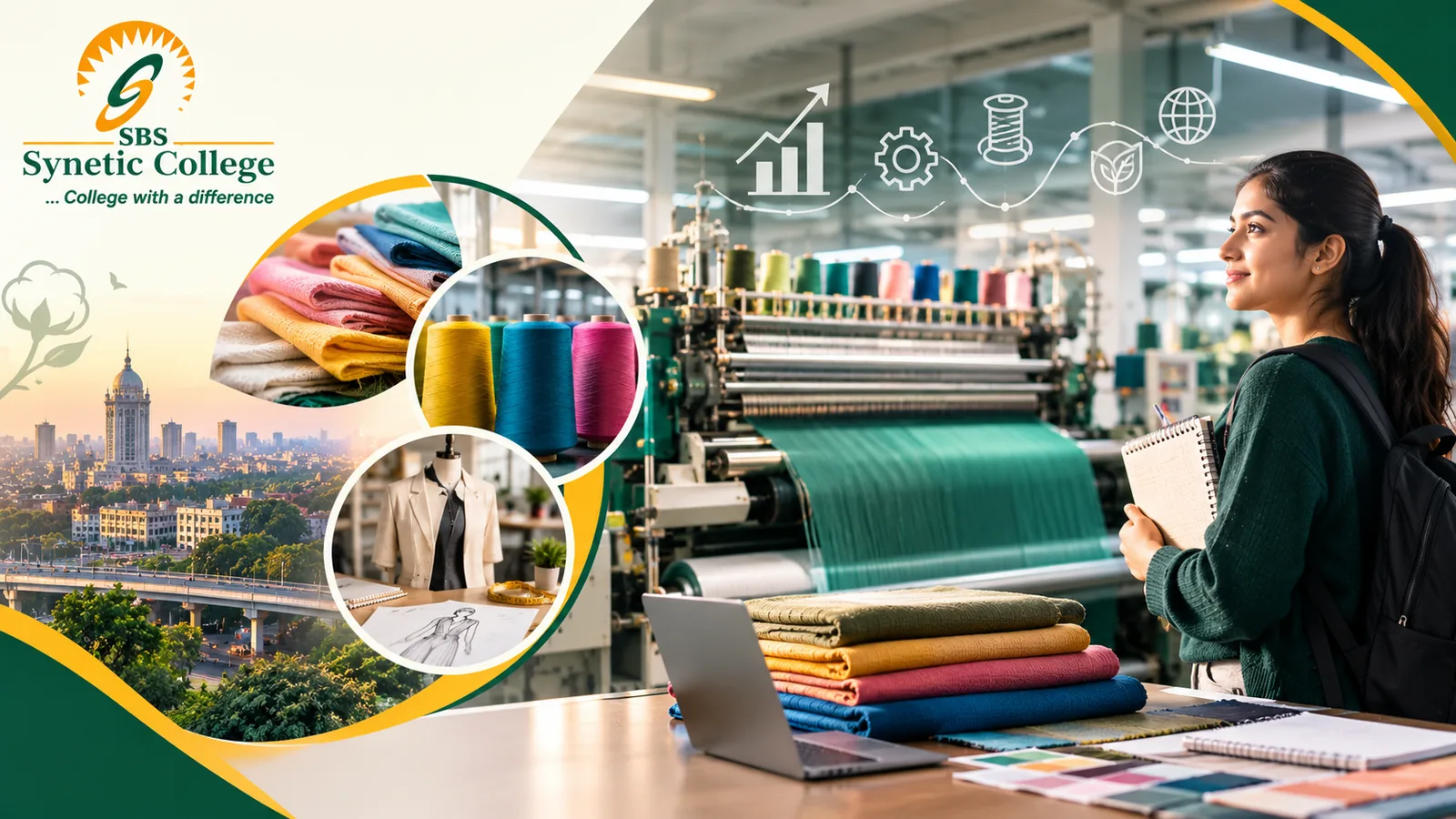
Ludhiana makes 95% of India's knitwear across 10,000+ units. The real 2026 numbers on the industry, the trends reshaping it, and exactly where SBS Textile Design and Fashion Designing graduates fit in.
The City That Runs on Thread
Every third sweater sold in India was probably knitted within a few kilometres of where this sentence is being read. Ludhiana doesn't just have a textile industry — it is one, and has been for generations. The BBC calls it "India's Manchester." The numbers back that up.
That last number isn't a Ludhiana figure — it's the whole of India, and it matters because it shows the direction the wind is blowing. India's textile market was already worth USD 152.40 billion in 2025, supports over 45 million jobs nationally, and contributes roughly 2.3% of India's GDP. India is the world's third largest exporter of textiles and apparel. Ludhiana isn't a small piece of that story — for knitwear specifically, it is the story. Read more on why Ludhiana is called India's Manchester.
Three Trends Actually Reshaping Textile Careers in 2026
1. Design Has Gone Digital — and That Changes Who Gets Hired
A decade ago, a textile designer's core tool was a sketchbook and a physical loom sample. Today, export houses and manufacturers expect fluency in CAD software (Adobe Illustrator, CorelDRAW, digital pattern-making tools) before a design ever reaches a physical sample. This isn't replacing design skill — it's raising the floor. Graduates who can move fluidly between hand-drawn creativity and digital production tools are the ones getting interviewed first.
2. Sustainability Stopped Being Optional
Export buyers in Europe and the US increasingly demand sustainable and ethical sourcing documentation before placing an order. Ludhiana's manufacturers are adapting fast — sustainable dyeing, recycled fibre blends, and ethical production practices are moving from a "nice to have" on a résumé to a genuine hiring filter, particularly for export-facing roles.
3. E-Commerce and D2C Brands Created a New Kind of Job
The explosion of direct-to-consumer apparel brands selling online has created a category of work that barely existed a decade ago: brands that need fresh print and pattern collections constantly, but don't want or need a full in-house design team. That gap is increasingly filled by freelance and remote textile/print designers — a real shift that's opened doors well beyond the traditional "join a company, work in-house" path.
Where SBS Graduates Fit Into All of This
Semester 1–2 — Foundations
Fibres, yarns, weave structures and colour theory, alongside your first CAD tools
Semester 3–4 — Industry Immersion
Real dyeing, printing and knitting technology, plus structured visits to Ludhiana manufacturers
Semester 5–6 — Portfolio & Placement
Export management, entrepreneurship, a major project, and a placement-ready portfolio
After Graduation
Industry design roles, export merchandising, freelance and remote design work, or your own label
This pathway only works because of where it happens. A textile design degree taught in a city with 10,000+ industrial units is a fundamentally different education than the same syllabus taught somewhere with none. At SBS, that difference is built into the structure of the B.Sc Textile Designing program itself, not left to chance.
70% practical, 30% theory is the number that matters most. Most textile design courses in India run the opposite ratio — heavy on theory, light on hands-on production, leaving graduates to learn the actual craft on the job. At SBS, students spend the majority of their degree working with real fabric samples, developing print and weave collections, and using industry-standard software — not just reading about it.
That practical training isn't confined to campus. Our Textile Design students have trained directly at Jawandsons Pvt. Ltd. (fabric production, buyer specifications, export-quality standards), visited Neva Garments Ltd. to see garment manufacturing from fabric to finished product, and attended the GMMSA Expo — Ludhiana's premier textile machinery and innovation exhibition. In March 2026, our students went further still, representing India's textile heritage on stage at PAU's Swadeshi Mela to a standing ovation — a fashion show built entirely on skills learned in the studio, not just performed for one.
The Business, Freelance and Work-From-Home Path Nobody Explains
Most conversations about textile careers stop at "get placed at a company." That's the safest path, and Ludhiana makes it a genuinely strong one — but it isn't the only one, and 2026's trends are opening up real alternatives:
- Freelance print and pattern design. Export houses and D2C brands increasingly commission collections from freelance designers rather than expanding in-house teams — real, paid work that can be done remotely once you have a portfolio and CAD fluency, both of which are built directly into the SBS curriculum.
- Remote CAD and digital pattern work. As digital textile printing replaces traditional screen printing, the technical skill of producing print-ready digital files has become genuinely location-independent — you don't need to be on a factory floor to do it, only trained to do it well.
- Starting a small label. Few cities in India let a design-led entrepreneur move as fast from concept to physical product as Ludhiana does. With 10,000+ manufacturers, sample-makers, and fabric suppliers within the same city, the distance between "I have a design" and "I have a sellable product" is shorter here than almost anywhere else in North India.
None of this replaces solid company placement as the primary, most reliable outcome for most graduates — it's what becomes possible in addition, once you're trained on the same tools the industry actually runs on.
Degree or Diploma: Two Real Entry Points
SBS offers two genuinely different ways into this industry, and the right one depends on your timeline:
- B.Sc Textile Designing — a 3-year, PTU-affiliated government degree, 70% practical, covering the full pipeline from fibre to fabric to finished product, ending in a portfolio and placement-ready skillset.
- Diploma in Textile & Fashion Designing (via SIMTA) — an ISO 9001:2015 certified, faster entry point covering fashion illustration, fabric science, garment construction and merchandising, open to every academic stream. SIMTA's Level Up system lets you start with a 1-year Basic Diploma and progress to Intermediate and Advanced levels later, with no re-registration fee — so you're never locked into a decision made on day one.
Many students do both, using the diploma as a running start into the degree, or the degree as the foundation before specialising further.
The Honest Numbers on What Graduates Earn
Textile design salaries in India scale with skill and portfolio strength, not just years on a resume:
- Fresher (0–2 years): ₹3–5.5 LPA
- Mid-career (3–5 years), with CAD and digital printing skills: ₹6–10 LPA
- Senior designer / art director: ₹10–20 LPA+
- Independent label owner or freelance consultant: income uncapped, driven by portfolio and client base rather than a fixed scale
These aren't Ludhiana-inflated numbers — they're realistic across India. What Ludhiana changes is how fast a graduate reaches them, because the industry that pays these salaries is the same industry the degree is taught inside of.
Frequently Asked Questions
How big is Ludhiana's textile industry, really?
Very. Ludhiana produces around 95% of India's knitwear, is home to over 10,000 textile industrial units, and directly employs more than 500,000 people — earning it the nickname "India's Manchester" from the BBC.
What trends should a textile design student actually pay attention to in 2026?
Three: the shift to digital design tools (CAD, digital printing) as a baseline expectation, sustainability becoming a real hiring and export requirement rather than a bonus, and the rise of e-commerce/D2C brands creating genuine freelance and remote design work alongside traditional in-house roles.
Can a B.Sc Textile Design graduate actually freelance or work from home?
Yes, increasingly so. Export houses and online-first apparel brands commission freelance print and pattern designers, and digital pattern-making work is largely location-independent once you have the CAD skills — both of which are part of the SBS curriculum, not an extra course you'd need to seek out separately.
What's the real difference between the B.Sc Textile Design degree and the SIMTA diploma at SBS?
The degree is a 3-year, government-affiliated program that's 70% practical, ending in a full portfolio and broad industry-ready skillset. The SIMTA diploma is a faster, ISO-certified entry point open to any academic stream, structured in Basic/Intermediate/Advanced levels you can upgrade through over time. Many students use one to lead into the other.
Do I need to move to Mumbai or Delhi for a good textile career?
No — and that's the specific advantage of studying textile design in Ludhiana rather than fashion design. Ludhiana's own industrial base is large enough that most textile design graduates find real employment within the city itself, without needing metro relocation.
What makes SBS's textile program "industry-connected" rather than just academic?
Direct, structured training at real companies — Jawandsons Pvt. Ltd. and Neva Garments Ltd. among them — attendance at the GMMSA textile machinery expo, a fashion show performed at PAU's Swadeshi Mela, and an annual UMEED Mega Job Fair with 35+ recruiting companies. It's built into the curriculum, not offered as an optional add-on.
Ludhiana didn't earn the name "India's Manchester" by accident — and a textile design degree taught inside that industry, not beside it, is the entire point. — SBS Editorial Team
Written by
SBS Editorial Team
Synetic Business School — sharing stories, insights, and updates from our campus in Ludhiana, Punjab.